The RTM tool
A requirements traceability app for a tolling program, built by a small in-house team with AI agents. It ties each contract requirement to the epics, designs, business rules and tests that deliver it.
Who it’s forBusiness analysts, the test lead, the workstream leads and program leadership.
ProductBuilt with AIProgram delivery
10vendor teams plan from it
466 of 1,924commits are mine, in four weeks
75 secto run the test suite, down from 4 min 24
100%of cells survive an upload round trip
The problem
- The contract's requirements lived in a workbook that kept being revised.
- Delivery lived in Jira, which cannot join a requirement to its epic, its work and its test.
- About a third of the rows had no increment assigned.
- Leadership needed an honest answer at every gate: is this requirement covered?
What I did
- Ported my planning board into the team's app, reading the live requirements database.
- Built role-based access: groups, inherited roles, and a preview of every change before it is saved.
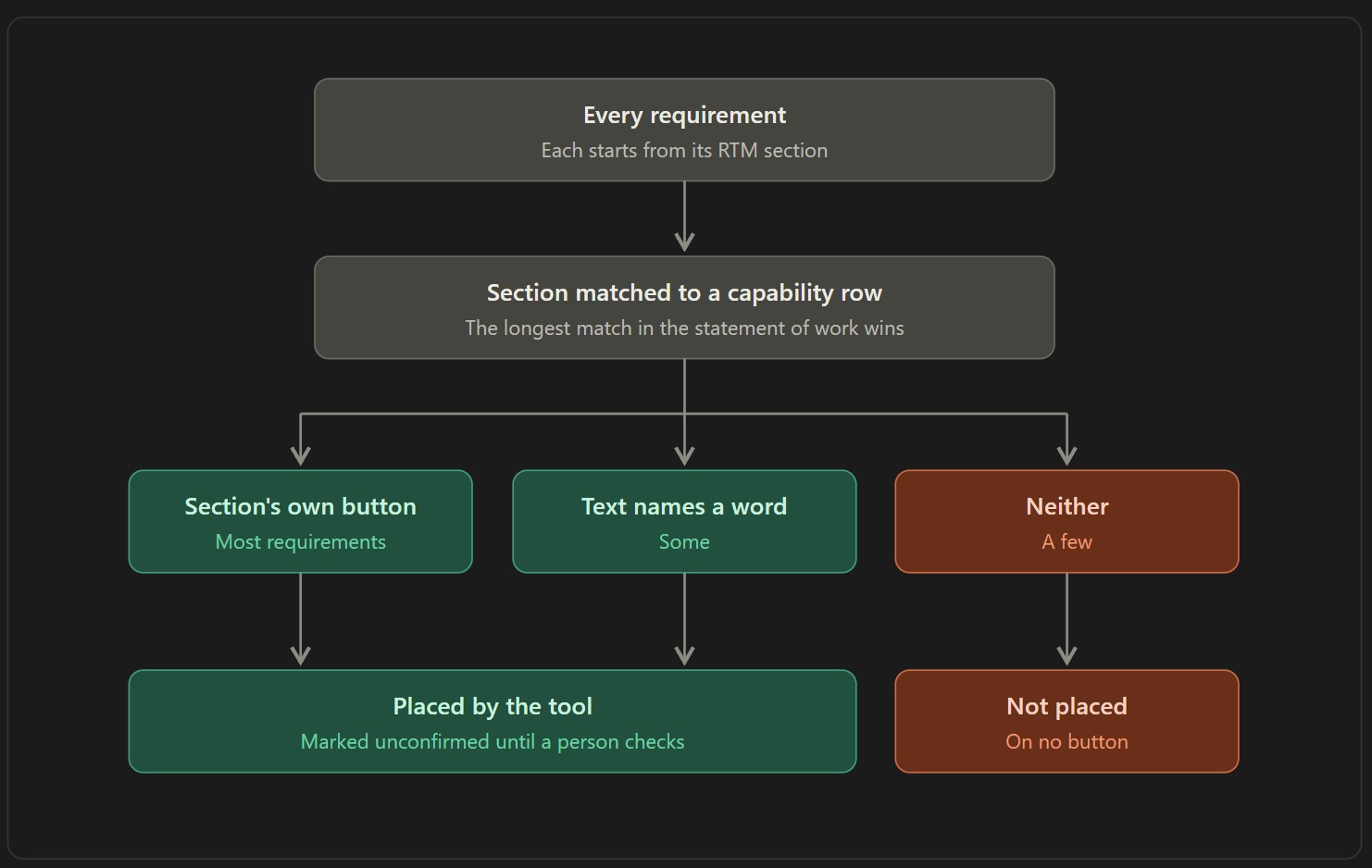
- Built the document library: Office and PDF files, search inside scans, and automatic links wherever a requirement number appears.
- Built the uploader, the test matrix, business-rules intake and the Scaled Agile planning module.
- Hardened it: the app fails closed without a key, and every route has a generated test.
- Added usage insight, so we can see how the team really works in it.
- Acted as the program's AI resource for the business analyst team.
What changed
- One place to answer: is this requirement covered?
- Program Increment 1 closed with every committed requirement accepted.
- The test suite runs in 75 seconds, down from 4 minutes 24.
- Not measured yet: adoption. The usage insight is there to produce that number.
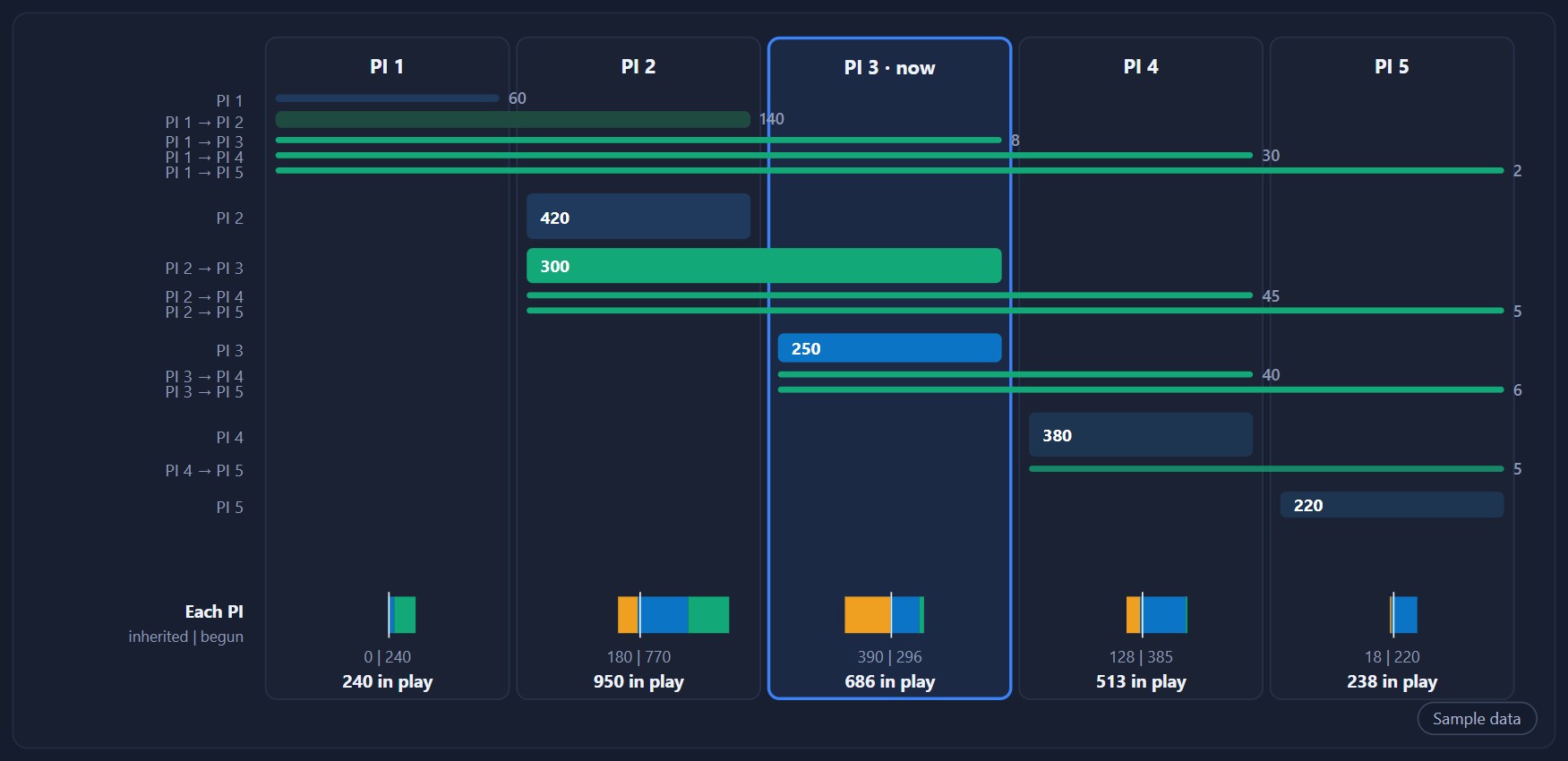
- The picture above is the app's usage view, redrawn with sample data.
Decisions
- An upload shows what will change before it writes anything.The workbook is revised often. The uploader reconciles the new file against the database first, and the round trip is exact, cell for cell.
- Access changes are previewed, and a refusal says why.People from different vendors share one tool. Nobody should have to guess what they can see, and a bulk change gets a dry run first.
- A new view is a switch. The view people know stays the default.The team was already working in the app, so new screens are opt-in.
- Big features are planned on paper first.For the planning module: research, a gap analysis, seven open decisions, a mock-up, then a twelve-phase build plan. Code came last.
How AI was used
- About 1,000 of the app's commits are co-authored by Claude. The team's loop is intent, plan, failing tests, then a verifier and a human review.
- My commits quote the dated instruction they answer, so every change traces back to a decision.
- I wrote six design documents for the agents and the team to build from.